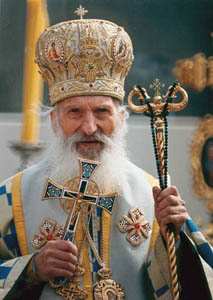
His
Holiness Patriarch Pavle
Patriarch of Serbian Orthodox Church
The spiritual leader of the Serbian Orthodox people was born September 11, 1914
to Stefan and Ann Stojcevic, in the village of Kucani, in the county of Donji
Miholjac, in Slavonija. His baptismal name was Gojko.
The Patriarch graduated with high honors from the Fourth Male Gymnasium (high
school) in Belgrade. He did postgraduate studies at the Orthodox Theological
Faculty at the University of Athens from 1955 to 1957. During his stay in
Greece, he studied the New Testament and developed an expertise in liturgics,
which resulted in the Patriarch becoming one of the most prolific liturgical
writers in the Serbian Church. For his patient and prominent work in the field
of theology, the Theological Faculty of the Serbian Orthodox Church awarded His
Holiness an Honorary Doctorate of Divinity.
From 1944 to 1955, he was a monastic of Raca Monastery performing different
disciplines. During the 1950/51 academic year, the then-Hierodeacon Pavle was appointed a lecturer
at the Prizen Seminary, a position which he retained until his election to the
Patriarchal Throne.
He was tonsured a monastic in 1948 and that same year he was ordained a
hierodeacon. In 1954, he was ordained a hieromonk and elected to the rank of
protosingelos. He was elevated to the rank of archimandrite in 1957 by Bishop
Emilian of Slavonija. On May 29, 1957, the Holy Assembly of Bishops elected
Archimandrite Pavle as Bishop of Raska-Prizen.
From that day to the present, he has faithfully shared in the plight of his
suffering people. Bishop Pavle wrote and warned of the present exodus of Serbs
from Kosovo, the attacks of the Albanians on Serbian monasteries, the rape of
nuns, and terrorizing of pedestrians, the desecration of Serbian cemeteries and
overall suffering of the Orthodox in Kosovo and in Metohija. In 1989, the then
Bishop Pavle was personally beaten by several Albanian youths in Kosovo. The
extent of his injuries required nearly 3 months of hospitalization. However, in the spirit of Christian
forgiveness, he refused to press charges.
It is not without reason that Patriarch Pavle has been referred to as a "saint
who walks." The simplicity of his lifestyle and his personal humility have found
favor by all of those who are familiar with this virtuous man. All of the
Bishops of the Serbian Orthodox Church have an automobile, which they use to
travel through their dioceses. The one exception has been Patriarch Pavle. When
asked why he never obtained an automobile, he replies: "I will not purchase one
until every Albanian and Serbian household in Kosovo and Metohija has an
automobile."
His Holiness has published Devich, The Monastery of St. Joanikije of Devich
(1989) and Questions and Answers to the Church Reader (1988). For the past 20
years, he has been responsible for the column in the Glasnik of the Serbian
Patriarchate known as Questions and Answers, dealing with liturgical and
sacramental questions. Through his efforts the Holy Synod published the new version of Srbljak in 1968. He also
coordinated the reproduction of liturgical studies Christian Feasts by M.
Skabalanovich, published originally in Kiev in 1915 in 6 volumes. The most
monumental contribution of H. H. Patriarch Pavle was the translation of the New
Testament published in 1984 under his supervision. This was the first official
Serbian translation of the New Testament approved by the Serbian Orthodox
Church. If all Bishop Pavle’s works were published, there would be thousands of
pages and many volumes. Patriarch Pavle exemplifies simplicity in his lifestyle
and is the embodiment of humility and personal holiness, a most worthy helmsman
to guide the "Ship of the Church" in these troubled times.
Biografija Patrijarha srpskog G. PAVLA
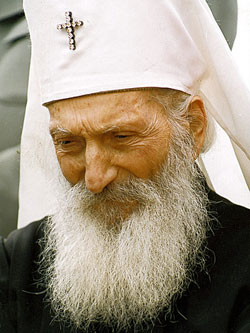
Njegova Svetost Patrijarh Pavle
Patrijarh Srpske Pravoslavne Crkve
Patrijarh Pavle (mirsko ime Gojko) rodjen je na Usekovanje 11.septembra 1914.
godine u selu Kucanci, Slavonija. Gimnaziju je zavrsio u Beogradu, Bogosloviju u
Sarajevu, a Bogoslovski fakultet u Beogradu.
Kao prognanik i izbeglica u vreme Drugog svetskog rata bio je u manastiru Svete Trojice u Ovcaru.
Bio je i veroucitelj dece izbeglica. Zamonasen je u manastiru Blagovestenju
1948. godine, kada je rukopolozen u cin jerodjakona. Od 1949. do 1955. sabrat je
manastira Race gde vrsi razna poslusanija. U cin jeromonaha rukopolozen je
1954., protosindjel je postao iste te godine, a arhimandrit 1957. U Atini je bio
na postdiplomskim studijama od 1955. do 1957 godine.
Za episkopa
rasko-prizrenskog izabran je 29. maja 1957. i hirotonisan u beogradskoj Sabornoj
crkvi.
U rasko-prizrenskoj eparhiji gradi nove hramove, obnavlja stare i porusene,
cesto putuje, obilazi i sluzi u svim mestima ove svoje Eparhije. Bavi se i
naucnim radom, objavljuje radove, povremeno drzi predavanja.
Za cetrdeset cetvrtog patrijarha srpskog (nova ikonica - srpski patrijarsi),
umesto obolelog patrijarha Germana, izabran je od Svetog arhijerejskog sabora
Srpske pravoslavne crkve novembra 1990. godine. Ustolicen je u nedelju, 2.
decembra 1990. godine u Sabornoj crkvi u Beogradu, a u drevni presto srpskih patrijaraha ustolicen je u manastiru
Pecke Patrijarsije 22. maja 1994.godine.
Patrijarh Srpski G. Pavle ucinio je kanonske posete mnogim eparhijama Srpske
pravoslavne crkve u zemlji i inostranstvu. Posetio je Srpsku crkvu u Australiji,
u Americi, Kanadi, Zapadnoj Evropi...
Bezbroj puta je pisao i intervenisao kod raznih drzavnika i mnogih institucija
da se pomogne u resavanju krize i uspostavljanju mira na prostorima prethodne
Jugoslavije. Tim povodom imao je susrete sa predstavnicima Rimokatolicke crkve,
Islamske verske zajednice, predstavnicima Svetskog saveta crkava, diplomatima,
drzavnicima, predstavnicima humanitarnih i drugih organizacija.
Posetio je i sediste Ujedinjenih nacija u NJujorku, Belu Kucu u Vasintgonu gde
je sa odgovarajucim licnostima razgovarao i iznosio cinjenicno stanje u vezi sa
izbijanjem rata u prethodnoj Jugoslaviji.
Veliki duhovnik, asketa i sjajan besednik, ovaj prvosvestenik svakodnevno - kad
crkvena pravila dozvoljavaju, prinosi beskrvnu zrtvu (sluzi svetu Liturgiju) za spas srpskoga roda krstonosnoga.
Упокојио се у Господу Патријарх српски Г. Г. Павле
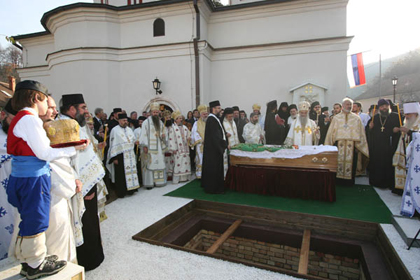
15. новембра 2009. године, у 10,45 часова, на Војно-медицинској академији у Београду, после примања Свете Тајне Причешћа, упокојио се у Господу Архиепископ пећки, Митрополит београдско-карловачки, Патријарх српски Г. Г. Павле.
Сахрана Његове Светости Патријарха Српског Г. Павла
Интернет презентација Патријарх Српски Господин Павле (1914-2009)
Фотогалерија Вечнаја памјат
Беседе Патријархa српскoг Г. Г. Павлa
Митрополит Амфилохије: Погребно слово Патријарху Павлу
Свесвјатјејши Архиепископе Константинопољски и Васељенски Патријарше, Блажењејши, Преосвјашчењеши Архиепископи и Епископи Цркве Христове, часни саборе народа Божјег,
"Ви сте свјетлост свијету. Не може се свјетиљка сакрити која на гори стоји..." Ријеч је, драга браћо и сестре, Христа Бога упућена сљедбеницима његовим, истовремено и као призив и као истина, безброј пута потврђена у двехиљадегодишњој историји Цркве Божје. Један од живоносних свједока истинитости ових ријечи Господњих почива овдје пред нама окренут лицем према вјечности, према непролазном Царству Небеском, као безмјерној мјери, како његовог тако и живота свих људи и свих земљаских народа.
Да се заиста овај скромни, тихи човјек, који је нимало случајно добио име Апостола народа Павла, преобразио у свјетлост свијету и постао свјетиљка која на гори стоји, свједоци сте сви ви сабрани данас око његовог одра; свједоци су и ове десетине и стотине хиљада људи који су ових дана хрлили као ријека неби ли се само дотакли њега и видјели небески покој и мир зрачећи са његовог упокојеног лика.
На блаженог спомена Патријарху Павлу испуњује се, очевидно, ријеч коју је сам изговорио за друге: "Кад се човјек роди, цео свијет се радује, а само он плаче. Али треба живјети тако, да када се он упокоји цио свијет плаче, а само се он радује." И заиста, да овај Божји човјек Павле није живио достојно свог људског и хришћанског звања, како би се могло догодити да оваква и оволика туга прожме овај милионски град, и шире од њега? Што је још чудније, свепрожимајућа туга, није обично туговање за губитком неког ко нам је мио и драг, него већ сада и овдје постаје радосна туга, радостотворна туга. Туга је јер представља растанак и губитак; радост је јер осјећамо и знамо да онај кога губимо и који одлази, остаје са нама и међу нама постајући још присутнији Духом Светим него што је био док је тјелесно са нама живио и међу нама ходио.
У томе и јесте и увјек је био парадокс живота истинских и правих људи: својим одласком они не само што не нестају, него постају све присутнији у људском животу, постајући уз то и мјера и критериј свога времена и збивања свога времена.
Како се то објашњава? Како то објаснити у животу Патријарха Павла? Прво и основно објашњење: младић Гојко Стојчевић, монах, свештеник, Епископ Павле је као и сви Свети и истински људи прије њега - увјек творио оно што је говорио. Прије свега, овај покојник што је пред нама био је човјек дубоке и стамене вјере у Живога Христа Бога у Цркви Његовој тј. вјере која дјела, јер "вјера без дјела је мртва". Он је на боголики начин, ријеч претварао у дјело, дарујући дјелу смисао вјечни и непролазни.
Говорећи и проповиједајући Еванђеље Патријарх Павле оваплоћивао је Еванђеље, благу вијест вјечног живота, у свој живот, постао је ходеће Еванђеље постајући блага, добра вијест људима и свима створењима. Својом вјером и животом по вјери, он је показао истинитост ријечи Теофила Антиохијског: "Покажи ми твога човјека, да ти покажем мога Бога". Небеса приповиједају славу Божију али ништа и нико није у стању да посвједочи постојање Бога и истину Божију, колико прави Човјек. У непрекидној поворци оних који су ових дана приступали Патријарху, на питање једној дјевојци зашто то чини чуо се њен одговор: "Зато што је он човјек високог морала и великог поштења."
Ријеч Патријарха Павла је била блага а његови докази јаки; шта више најјачи доказ истинитости његове ријечи био је управо његов живот. Јер, по ријечи једног његовог светог предходника: "Свака ријеч има своју против ријеч; једино се неможе супротставити ништа и нико - истинском животу.
Патријах Павле је човјек дјелатне, дјелотворне вјере и подвига, а тиме и човјек вјерности истини Божијој - до смрти. У њему се, по пророку "срела милост и истина, правда и љубав загрлила". Знао је и сагласно томе је живио да се зло у другима не лијечи и не може излијечити својим злом: "Правда Бога истонога" мајке Јевросиме била је мјера његовог односа према својима и према туђима без разлике. Истом љубављу је волио свој Богом му повјерени народ, и сваки други народ, и сваког човјека као боголико биће и свако створење Божје.
Патријарх Павле никоме не суди, он само расуђује, поштујући слободу свакога. Трезвеумни зналац људске природе, он никада не повлађује ни својим ни туђим страстима, заблудама и самољубљу. Читавог живота се трудио да не буде никоме на терету. Све што је био и што је имао - давао је другоме, на природан ненаметљив начин, ништа за себе нетражећи...
Својим несебичним и ненаметљивим живљењем међу нама, више него ли својим ријечима, овај Свети Старац и цјелосни Човјек Цркве Божје Христове, пробудио је ево ових дана скривену доброту, човјечност и богољубље и братољубље у хиљадама душа које су га на мртвачком одру препознале као свога најрођенијега, брата, оца, пријатеља, који их никад неће заборавити или оставити.
Питао сам се последње двије године његове старачке немоћи и везаности за постељу у болници: Шта то значи? Што је Бог попустио на њега и на нас такву пробу и искушење? На крају од овогодишњег празника Усјековања Св. Јована Крститеља, његовог рођендана, у чијем знаку се одвијао сав његов живот, нашао сам одговор на ово питање: Овдје је његов Христолики и Христоносни живот постао у пуној мјери и дубински Христолик. Наиме ако се у току свог живота трудио да проповијеђу и поукама поучава и тјеши људе, то је својим старачим страдањем и боловима - учествовао ћутљиво и стварно у болу и патњи својих сапатника болесника на ВМА. Трудећи се читавог живота да буде "сарадник Божји" он се на крају сараспео Христу и понио крст својих ближњих сапатника и састрадалника својих без рјечи и без ропота.
Сараспео се Христу Патријах Павле и својим ближњима, да би са Њим и са њима васкрсао и ушао у радост Господа свога.
Господе, подари слуги вјерном твоме и Оцу нашем Патријарх Павлу, вјечно Царство Твоје којим је живио и за којим је чезнуо, Царство Оца и Сина и Духа Светога во вијек вијека. Амин.